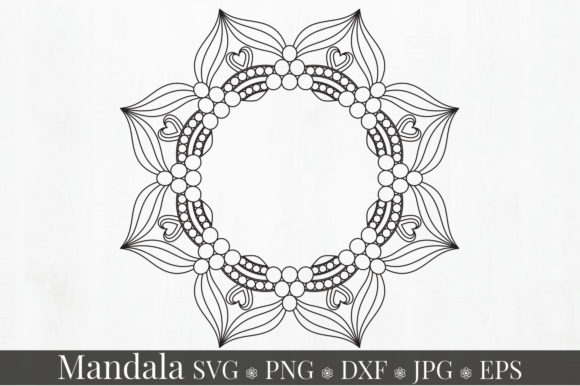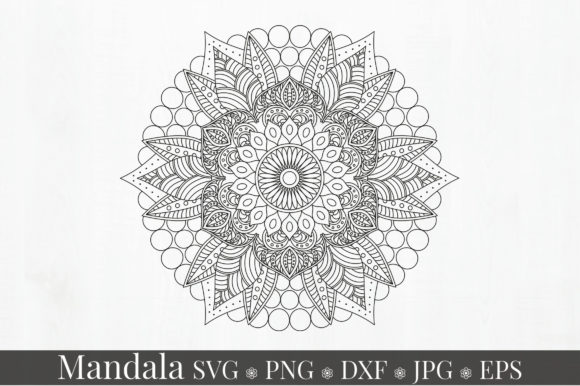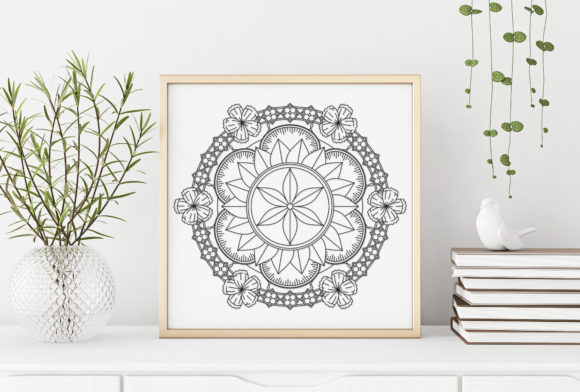
What Is a Mandala Art SVG Vector File—and Why It’s a Creative Game-Changer
Mandala art—symmetrical, intricate, and deeply meaningful—has captivated cultures for centuries. From ancient Hindu and Buddhist spiritual diagrams to modern mindfulness coloring books, mandalas represent harmony, focus, and wholeness. But today, this timeless art form has found new life in digital spaces—not as static images, but as Mandala Art SVG vector files. If you’ve ever wondered what an SVG file is, why it matters for mandala design, or how it empowers creators, educators, designers, and hobbyists alike, you’re in the right place.
Understanding the Basics: What Is an SVG File?
SVG stands for Scalable Vector Graphics. Unlike common image formats like JPEG or PNG—which are made of fixed pixels—an SVG is built from mathematical instructions: points, lines, curves, and shapes defined by code. This means it can be scaled to any size—tiny on a smartphone screen or massive on a billboard—without losing clarity or sharpness.
Think of it like a blueprint versus a photograph. A photograph (raster image) captures detail at one resolution; zoom in too far, and it blurs. A blueprint (vector) contains precise instructions for drawing the same shape at any scale—always crisp, always clean.
Why SVG Is Ideal for Mandala Art
Mandalas thrive on precision: concentric circles, radial symmetry, repeating patterns, and fine linework. These qualities align perfectly with vector capabilities:
- Perfect scalability: Print a mandala at 2 inches or 20 feet—it retains razor-sharp edges.
- Editability: Change colors, adjust stroke widths, or isolate individual petals or layers with ease—in tools like Adobe Illustrator, Inkscape, or even web-based editors.
- Small file size: Complex mandalas encoded as SVGs often weigh less than 100 KB—ideal for websites, apps, and fast-loading digital resources.
- Web-native compatibility: SVGs embed directly into HTML, support CSS styling and JavaScript interactivity, and work seamlessly with responsive design.
From Sacred Symbol to Digital Tool: The Evolution of Mandala Art
Historically, mandalas served meditative, ritualistic, and cosmological purposes—from Tibetan sand mandalas painstakingly created and ritually dissolved, to Rangoli designs drawn daily in Indian homes. Their circular structure symbolizes unity, the universe, and the journey inward.
In the 20th century, Swiss psychiatrist Carl Gustav Jung recognized mandalas as powerful tools for psychological integration. He encouraged patients to draw them spontaneously as a path to self-awareness—a practice now echoed in modern art therapy and stress-relief activities.
Today, that tradition meets technology. A Mandala Art SVG vector file isn’t just a decorative download—it’s a flexible, reusable, and deeply intentional creative asset. Whether used for laser cutting intricate wooden coasters, embroidering textile patterns, designing branded merchandise, or building interactive web animations, SVG mandalas bridge ancient symbolism with contemporary utility.
Real-World Uses Across Industries
The versatility of Mandala Art SVG files makes them relevant far beyond personal coloring pages. Here’s how different fields put them to work:
Educators & Therapists
Teachers use SVG mandalas in geometry lessons to explore symmetry, angles, and radial design. Counselors and occupational therapists import them into digital whiteboards or printable PDFs for guided focus exercises—especially helpful for neurodiverse learners or students managing anxiety.
Designers & Makers
Graphic designers integrate SVG mandalas into branding elements—think logo motifs, website backgrounds, or animated loading icons. Crafters use them with Cricut or Silhouette machines to cut vinyl decals, etch glass, or engrave leather. Because SVGs retain editable paths, designers can recolor a single layer to match brand guidelines—or generate dozens of variations from one source file.
Developers & Web Professionals
Front-end developers embed SVG mandalas directly into HTML for lightweight, accessible visuals. With CSS, they can animate rotations, pulse opacity, or trigger hover effects—turning a static symbol into an engaging user experience. No external image requests. No blurry fallbacks. Just clean, semantic, performant code.
Common Misconceptions—Clarified
Despite their growing popularity, several myths surround Mandala Art SVG files:
- “SVGs are only for designers.” Not true. Free tools like Inkscape (open-source) and Vectr make editing SVGs accessible—even for beginners.
- “All mandala downloads are SVGs.” Many free “mandala” files online are actually low-res PNGs or uneditable JPGs. Always check the file extension and preview options before downloading.
- “Using SVG mandalas requires coding knowledge.” Not at all. You can drag-and-drop SVGs into Canva, upload them to Cricut Design Space, or insert them into PowerPoint—no code needed.
- “Mandalas are only for spiritual or religious use.” While rooted in sacred traditions, modern mandala art embraces secular creativity—from data visualization (radial charts) to architectural floor plans and generative AI art prompts.
How to Choose & Use High-Quality Mandala SVG Files
Not all SVG mandalas are created equal. To ensure usability and value, look for these traits:
- Well-structured layers: Organized groups (e.g., “outer ring,” “petals,” “center motif”) let you hide, recolor, or animate parts independently.
- Clean paths and minimal anchor points: Reduces file bloat and improves rendering speed—especially important for web use.
- Commercial-use licensing: If you plan to sell products featuring the mandala (e.g., T-shirts, stickers, digital planners), verify the license permits commercial application.
- Compatibility notes: Reputable sellers specify which software versions the file supports (e.g., Illustrator CC 2020+, Inkscape 1.3+).
Pro tip: Start simple. Download a free, well-labeled SVG mandala, open it in Inkscape, and experiment—change one color, delete a layer, export as PNG. That hands-on familiarity builds confidence faster than any tutorial.
Looking Ahead: Mandala SVGs in an AI-Accelerated World
As generative AI tools advance, we’re seeing AI-assisted mandala creation—tools that generate symmetrical patterns from text prompts or sketches. Yet, the output is only as useful as its format. An AI-generated mandala saved as a PNG loses scalability and editability. Exported as SVG? It becomes a living design component—ready for refinement, iteration, and integration.
This synergy between human intention and machine capability underscores a broader truth: technology doesn’t replace tradition—it extends it. The mandala remains a vessel for meaning; the SVG is the modern vessel for sharing it widely, accurately, and beautifully.
Final Thought: More Than Just a File Format
A Mandala Art SVG vector file is more than code and curves. It’s a convergence of patience and precision, heritage and innovation, stillness and motion. Whether you're printing a meditation guide, launching a mindful stationery line, teaching symmetry to 5th graders, or simply seeking a moment of visual calm in a scrolling world—this small, scalable file carries big purpose.
So next time you see “SVG” listed beside a mandala design, don’t just skim past it. Recognize it for what it is: a key—unlocking clarity, creativity, and connection, one perfectly scalable circle at a time.