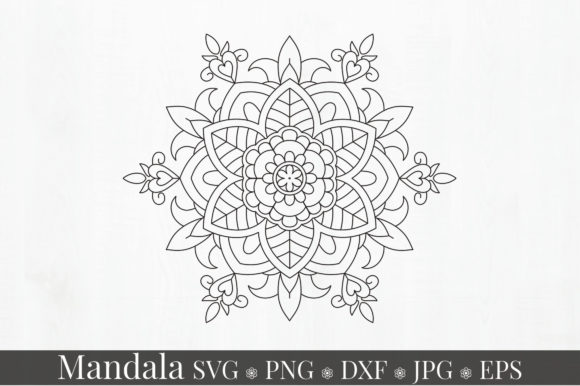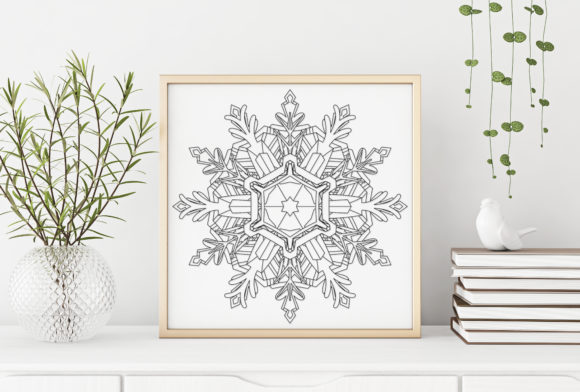
Mandala Circular Ornament: Meaning, Use, and Practical Considerations
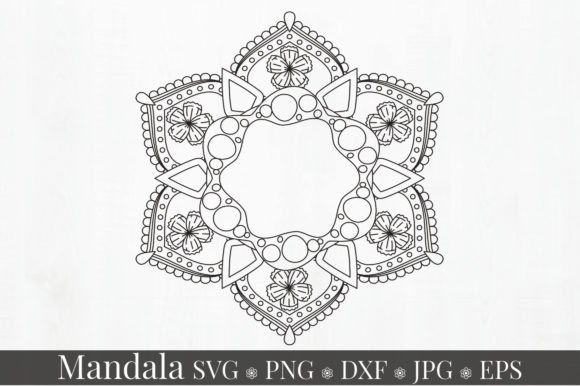
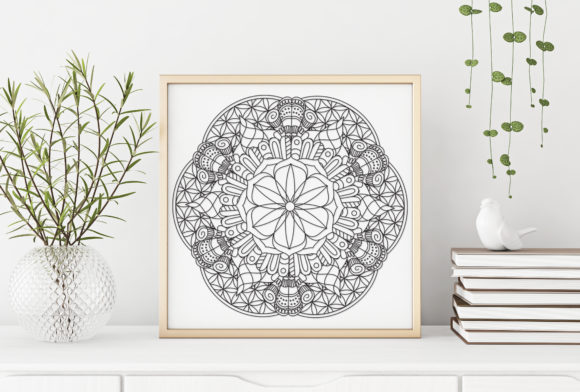
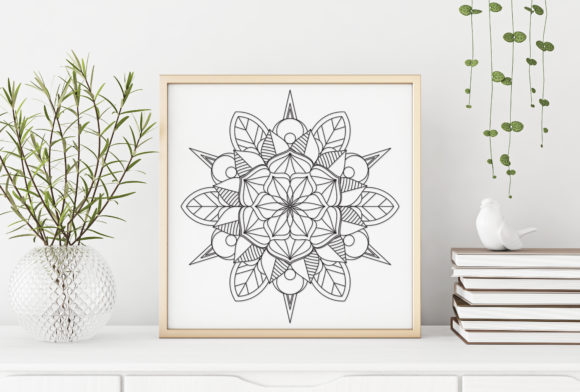
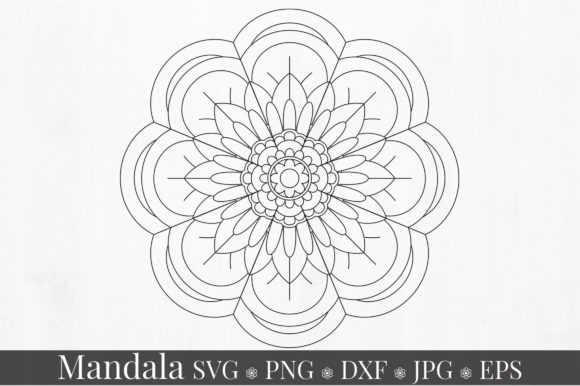
A Mandala Circular Ornament is a decorative or symbolic design rooted in ancient spiritual traditions—particularly Hinduism and Buddhism—but widely adopted today in secular contexts for its visual harmony and structural precision. At its core, it’s a geometric composition arranged radially around a central point, typically featuring repeating patterns, symmetry, and layered concentric forms. Unlike generic circular motifs, the Mandala Circular Ornament carries intentional balance: every element relates proportionally to the center, reinforcing cohesion rather than mere repetition.
What Sets It Apart from Other Circular Designs
Not all circular ornaments qualify as mandalas. A simple ring, a sunburst pattern, or a radial gradient lacks the deliberate structure and symbolic scaffolding that defines a true Mandala Circular Ornament. Its distinguishing traits include:
- Centric focus: Every line, shape, or motif originates from or returns to a defined center—often left empty or marked with a subtle symbol.
- Layered symmetry: Multiple bands or zones radiate outward, each with consistent internal repetition (e.g., eight petals, sixteen triangles, or four quadrants).
- Intentional proportion: Ratios between rings, spacing, and motif scale often follow traditional guidelines—not arbitrary aesthetics.
- Cultural resonance: Even in non-spiritual use, the form retains associations with mindfulness, integration, and cyclical thinking.
This contrasts with decorative circles used in modern graphic design—like halos, targets, or abstract radial gradients—which prioritize visual impact over structural meaning. A Mandala Circular Ornament invites closer inspection; its value lies as much in how it’s built as in how it looks.
Where It Fits Among Related Forms
When evaluating ornamental options, the Mandala Circular Ornament occupies a distinct niche between purely functional geometry and expressive symbolism. It shares ancestry with other radial forms—but differs meaningfully:
- Floral motifs (e.g., rosettes or daisies) emphasize organic growth and softness. Mandalas prioritize mathematical clarity—even when stylized—and rarely mimic botanical irregularity.
- Islamic geometric patterns often use circles as frameworks but extend infinitely across surfaces. A Mandala Circular Ornament is self-contained, bounded, and complete within its outer circle.
- Yin-yang symbols are circular and dualistic, but minimal and binary. Mandalas accommodate complexity—dozens of elements coexisting without visual competition.
- Modern data visualizations (e.g., radar charts or pie-based infographics) borrow radial layout but serve analytical ends. The Mandala Circular Ornament prioritizes perceptual unity over information hierarchy.
This specificity makes it especially useful where coherence, reflection, or balanced representation matters more than speed, scalability, or raw data fidelity.
Strengths in Real-World Application
The Mandala Circular Ornament excels in contexts where visual calm, structural integrity, and layered meaning support the user’s goal. For example:
- Interior design: As a wall plaque or floor inlay, it anchors a space without dominating it—unlike asymmetrical art or bold typography. Its symmetry helps unify rooms with mixed textures or angles.
- Educational tools: Teachers use simplified mandala templates to teach fractions, rotational symmetry, or cultural studies—because the form makes abstract relationships tangible.
- Personal practice: Coloring books or meditation aids built around the Mandala Circular Ornament offer structured yet open-ended engagement—more accessible than freeform drawing, less rigid than grid-based journaling.
- Branding elements: When a company seeks to convey balance, wholeness, or thoughtful integration (e.g., wellness platforms, sustainability initiatives), this ornament communicates those values without literal imagery.
In each case, the strength lies not in novelty but in reliability: the form has been tested across centuries and cultures for its capacity to organize attention and evoke stability.
Tradeoffs and Practical Limits
Despite its versatility, the Mandala Circular Ornament isn’t universally optimal. Its very strengths introduce constraints:
- Scalability challenges: Fine detail in inner rings can blur or vanish at small sizes (e.g., on app icons or textile embroidery). Simplified versions retain legibility but lose some symbolic nuance.
- Cultural sensitivity requirements: Using sacred symbols outside their original context demands awareness—especially in commercial or public-facing applications. Thoughtful adaptation (e.g., abstraction, attribution, or collaborative design with cultural practitioners) mitigates risk.
- Production complexity: Hand-drawn or hand-carved versions require skilled labor and time. Digital reproduction is straightforward, but high-fidelity physical renditions—like laser-cut wood or kiln-fired ceramic—involve tighter tolerances than linear or angular patterns.
- Limited narrative flexibility: It conveys harmony, cycle, or centering well—but struggles to express urgency, disruption, or linear progression. A timeline or arrow-based diagram remains more effective for showing sequence or change over time.
These aren’t flaws—they’re natural boundaries. Recognizing them helps avoid mismatched applications, like using a Mandala Circular Ornament as the primary interface for a task-oriented software dashboard.
When to Choose It—and When to Look Elsewhere
A Mandala Circular Ornament is most appropriate when your aim aligns with its inherent qualities: integration, contemplation, balance, or cyclical understanding. Consider it if you’re designing a logo for a holistic health practice, selecting a focal piece for a meditation room, or developing curriculum materials about systems thinking.
It becomes less suitable when priorities shift toward efficiency, contrast, motion, or explicit hierarchy. For instance:
- If you need to highlight a single action (e.g., “Sign Up” or “Buy Now”), a centered button with directional cues outperforms a symmetrical ornament.
- If your audience responds better to direct storytelling, a sequential illustration or photo collage may communicate more clearly than even a richly detailed mandala.
- If budget or timeline restricts fine-detail execution, a clean circular frame with minimal internal lines—or even a well-proportioned solid circle—may achieve similar grounding effects with lower overhead.
The decision isn’t about “better” or “worse,” but about alignment: does the Mandala Circular Ornament serve the function, audience, and medium—or does another form serve it more directly?
Making an Informed Choice
Start by clarifying intent. Ask: What response do I hope to invite? Calm focus? Cultural connection? Visual rhythm? Then assess constraints—size, material, production method, audience background. Compare how different circular forms meet those needs. A Mandala Circular Ornament offers depth and resonance, but only if the context allows space for it to be seen, interpreted, and felt.
For those exploring alternatives, consider sketching side-by-side: one version using a Mandala Circular Ornament, another with a simplified radial pattern, and a third with a non-circular anchor (e.g., vertical column or horizontal band). Observe which supports your goal without additional explanation. That test—grounded in use, not assumption—is the most reliable guide.