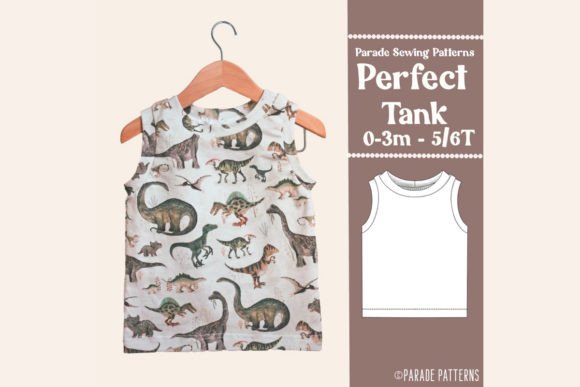
Why a Tank Top Sewing Pattern Is Your Summer Wardrobe’s Secret Weapon
There’s something quietly powerful about a well-fitted tank top. It’s not flashy—but it’s foundational. Whether you’re layering under blazers, throwing one on before a morning run, or wearing it solo on a humid afternoon, the tank top is where comfort meets intentionality. And when you sew your own using a thoughtfully designed tank top sewing pattern, that simple garment transforms from basic staple to personalized statement.
More Than Just a Sleeveless Tee
A tank top sewing pattern isn’t just a stripped-down T-shirt template. It’s engineered for breathability, mobility, and structure—without sleeves to distract or constrain. Unlike T-shirt patterns, most tank top patterns include specific design considerations: wider armholes for full shoulder rotation, reinforced shoulder straps (often with built-in stability), and carefully balanced side seams that prevent riding up during movement.
Think of yoga instructors adjusting their posture, gardeners reaching overhead for pruning shears, or teachers bending down to help students—all rely on unrestricted upper-body motion. A commercial tank top might stretch out or gape at the neckline after a few washes. But a custom-sewn version, cut from quality fabric and stabilized with the right techniques, holds its shape because you chose the grainline, seam allowance, and finishing method.
What Makes a Great Tank Top Sewing Pattern?
Not all patterns deliver equal results—even if they look similar on paper. Here’s what separates reliable, wearable designs from frustrating drafts:
- Multiple cup-size options: Many modern tank top sewing patterns now offer graded bust darts or full-bust adjustments built into the PDF. This matters especially for those who find off-the-rack tanks pulling across the chest or gaping at the front neckline.
- Strap versatility: Look for patterns that let you choose between narrow racerback, wide yoga-style, or adjustable tie straps. Some even include instructions for strap tabs or elasticized back bands—ideal for high-support needs.
- Fabric guidance that goes beyond “knit only”: While jersey and rib knits are go-to choices, certain patterns accommodate lightweight wovens (like linen-cotton blends) with appropriate seam finishes and ease allowances. That opens doors for breathable summer workwear or elevated casual looks.
- Realistic seam allowances and clear marking points: Nothing derails momentum like guessing where the center front fold line lands—or whether that tiny notch means “match to side seam” or “align with dart apex.” Precision here saves time and frustration.
How a Tank Top Sewing Pattern Fits Into Real Life
Sewing isn’t just about making clothes—it’s about solving daily problems with intention. A tank top sewing pattern supports this in surprisingly diverse ways:
For parents managing laundry cycles with three kids and two dogs, having five identical, durable tanks made from performance knit means fewer mismatched outfits and less frantic pre-school-morning searching. For remote workers, a soft, tagless, seam-free version—constructed with flatlock stitching and brushed cotton spandex—offers all-day comfort during back-to-back video calls. And for teens building confidence through creative expression, customizing strap colors, adding contrast binding, or embroidering initials onto a self-drafted tank becomes an act of identity-making—not just clothing production.
Even sustainability-minded sewists find value here. Fast-fashion tanks often use low-grade elastane blends that degrade quickly. With a tank top sewing pattern, you control fiber content: organic cotton lycra, recycled nylon spandex, or even Tencel™ jersey for temperature regulation and biodegradability. You also avoid packaging waste, excess dye runoff, and unethical labor practices baked into mass production.
Choosing the Right Pattern for *Your* Needs
Before downloading or purchasing any tank top sewing pattern, ask yourself three questions:
- What’s my primary use case? If it’s for workouts, prioritize patterns with racerback options, moisture-wicking fabric notes, and minimal side seams. If it’s for nursing or postpartum wear, look for asymmetrical openings or hidden plackets. For formal layering (say, under a sleeveless dress), opt for ultra-slim straps and clean neckline finishes.
- What’s my current skill level—and what do I want to learn next? Beginner-friendly versions often feature no darts, minimal shaping, and straightforward hemming. Intermediate sewists might seek patterns with curved hems, bias binding options, or French seam alternatives. Advanced users may explore variations like wrap-front tanks, double-layer mesh inserts, or convertible strap systems.
- Do I need size inclusivity—and does the pattern deliver it? Check the size range before buying. Some indie designers offer sizes up to 5XL with proportional grading, while others stop at XL and suggest hacking. Read recent reviews: do tall users mention length issues? Do curvy reviewers confirm bust adjustments worked?
Small Tweaks, Big Impact
One of the quiet joys of working with a tank top sewing pattern is how much influence you hold over fit and function—even before cutting fabric. Try these practical modifications:
- Lengthen or shorten the body by 1–2 inches depending on whether you plan to tuck it in or wear it loose. A cropped version pairs beautifully with high-waisted trousers; a longer line works under open cardigans.
- Add ¼ inch to strap width if you have broader shoulders or prefer subtle support. Narrower straps (under ½ inch) suit delicate frames but may dig in during extended wear.
- Swap standard twin-needle hems for coverstitch or blind-hem stitches if your machine allows. The difference in stretch recovery and professional finish is noticeable—especially on lightweight knits.
- Use contrasting binding on neck and armholes instead of folding and topstitching. It adds polish, reduces bulk, and gives you another chance to inject color or texture.
And don’t overlook interfacing. A lightweight fusible knit interfacing on the upper back strap area prevents stretching during wear—something many ready-to-wear tanks skip entirely, leading to sagging over time.
Where to Start—and What to Avoid
If you’re new to sewing tanks, begin with a pattern labeled “beginner” that includes video support or detailed photo tutorials. Skip anything requiring complex closures, invisible zippers, or multi-piece yokes until you’ve mastered clean stretch seams and stable hems.
Avoid rushing the fitting stage. Even experienced sewists often make a quick muslin—especially when trying a new tank top sewing pattern. Test the strap placement, check for drag lines around the armscye, and assess how the hem falls while seated and standing. It takes 45 minutes—and saves hours later.
Also resist the urge to buy every variation at once. One versatile pattern with multiple views (e.g., racerback, classic, sleeveless shell) will serve more purposes than five single-option downloads cluttering your digital library.
Ultimately, a tank top sewing pattern is more than paper and pixels. It’s permission to slow down, tune into your body’s needs, and create something useful—not just decorative. In a world that moves faster every season, choosing to sew your own tank top is a small, steady act of care—for your skin, your time, and your sense of self.