Mandala Alphabet: A Visual Language System for Mindful Learning and Creative Expression
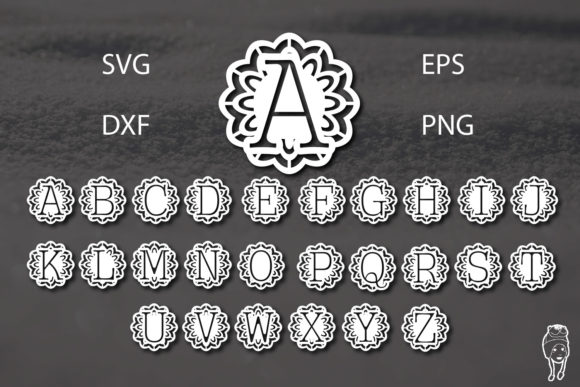
The Mandala Alphabet is not a traditional alphabet in the linguistic sense. It’s a symbolic, circular design system where each letter of the English alphabet is rendered as a unique mandala—a geometric, symmetrical composition rooted in meditative and contemplative traditions. Unlike phonetic scripts or digital fonts, the Mandala Alphabet transforms letters into visual anchors: structured, balanced, and rich with intentional repetition, radial symmetry, and layered meaning. Its purpose isn’t rapid reading or typing—it’s slowing down perception, deepening attention, and bridging literacy with visual cognition.
What Sets the Mandala Alphabet Apart
At its core, the Mandala Alphabet functions at the intersection of typography, sacred geometry, and cognitive engagement. Each glyph begins with a central point and expands outward through concentric layers—circles, petals, rays, or interlocking shapes—that encode the letter’s form without sacrificing legibility. For example, the “A” may emerge from a triangular core flanked by mirrored arcs; the “O” becomes a nested series of perfect rings; the “S” flows as a sinuous, bilateral curve within a bounded circle. This approach differs fundamentally from standard fonts, calligraphy systems, or even decorative typefaces, which prioritize aesthetics, speed, or historical fidelity over structural intentionality.
Unlike generative AI text tools or adaptive learning apps, the Mandala Alphabet doesn’t automate or personalize instruction. Instead, it invites active participation: drawing a mandala-letter requires observation, measurement, patience, and iterative refinement. That process supports neurodiverse learners, adults rebuilding fine motor skills after injury, or educators seeking non-digital pathways to reinforce letter recognition and spatial reasoning.
How It Compares With Other Visual-Learning Approaches
Many alternatives aim to strengthen literacy or cognitive engagement—but they do so through different mechanisms and tradeoffs:
- Phonics-based visual aids (e.g., picture-letter associations like “A is for apple”) emphasize sound-symbol links but rarely invite sustained visual analysis or pattern-making. The Mandala Alphabet complements phonics by reinforcing shape memory—not just sound—and can be especially useful when phonemic awareness is already established but orthographic recall remains fragile.
- Handwriting curricula (such as D’Nealian or Zaner-Bloser) focus on motor fluency and consistency. While effective for functional writing, they often treat letters as linear strokes rather than holistic forms. In contrast, the Mandala Alphabet encourages viewing each letter as a unified field—helping learners notice proportions, negative space, and symmetry that are easily missed in cursive or manuscript practice.
- Digital literacy apps offer instant feedback, gamified progress, and adaptive difficulty—but rely heavily on screen time and external validation. The Mandala Alphabet operates offline and self-paced, supporting metacognition: learners see their growth not in points or badges, but in increasing precision, balance, and confidence across successive drawings.
- Sacred script systems (e.g., Tibetan seed syllables or Islamic geometric calligraphy) share the Mandala Alphabet’s reverence for form and repetition, yet they’re embedded in specific spiritual frameworks and linguistic contexts. The Mandala Alphabet is secular, English-centric, and designed for accessibility—not ritual use—making it more readily adaptable in public education, therapeutic settings, or personal practice without cultural appropriation concerns.
Strengths and Realistic Use Cases
The Mandala Alphabet excels in contexts where attention, embodiment, and visual-spatial integration matter more than speed or scale. Educators working with students who experience dysgraphia, ADHD, or anxiety around writing often report improved engagement when introducing letters through mandala templates. One high school art-teacher integrated Mandala Alphabet exercises into a unit on visual rhetoric—students analyzed how symmetry conveys stability, repetition implies emphasis, and centering directs focus—then applied those principles to original typography projects.
In adult learning, it serves as both a grounding practice and a creative catalyst. A graphic designer recovering from repetitive strain injury used daily mandala-letter drawing to rebuild hand-eye coordination while exploring new compositional vocabularies. A mindfulness coach incorporated it into group sessions, pairing each letter with a reflective prompt (“B: Where do you set boundaries?”), turning literacy into embodied inquiry.
Its strength lies in flexibility—not prescriptiveness. You don’t need artistic training to begin. Starter guides provide traceable templates, grid overlays, and step-by-step breakdowns. As skill grows, users shift toward freehand rendering, variation studies (e.g., “How many ways can I express ‘M’ using only triangles and lines?”), or cross-disciplinary applications—mapping mandala-letters onto fabric patterns, laser-cut wood, or generative code.
Tradeoffs and Limitations to Consider
Because the Mandala Alphabet prioritizes depth over efficiency, it isn’t suited for every goal. If your priority is rapid handwriting acquisition for note-taking or standardized testing, dedicating time to mandala construction may delay functional fluency. Similarly, it offers no built-in support for spelling rules, grammar, or vocabulary development—those remain separate instructional domains.
It also assumes a baseline willingness to engage slowly and iteratively. Learners accustomed to immediate digital feedback—or those managing significant time constraints—may find the pace initially frustrating. There’s no “auto-correct” or “undo” button; revision happens through redrawing, reflection, and comparison. That’s a feature for some, a friction point for others.
Accessibility is another consideration. While high-contrast printable templates exist, the system relies on visual-spatial processing and fine motor control. It’s not inherently compatible with screen readers or voice-input tools. For blind or low-vision users, tactile versions (e.g., embossed or 3D-printed mandalas) are possible but require adaptation—not something included out-of-the-box.
When It Might Be the Right Choice—And When It Isn’t
The Mandala Alphabet tends to resonate most strongly when one or more of these conditions apply:
- You’re seeking a non-digital, hands-on method to reinforce letter structure—especially for learners who respond well to pattern, rhythm, or visual metaphor.
- You value process over product: where the act of drawing matters as much as the final image, and where mistakes are treated as data, not failure.
- You work across disciplines—art, therapy, education, design—and want a flexible, open-ended resource that invites interpretation rather than prescribing outcomes.
- You’re exploring how form influences perception, and want a concrete way to investigate concepts like balance, hierarchy, repetition, and centrality through familiar symbols.
Conversely, it’s less appropriate if your goals include:
- Preparing for timed writing assessments where speed and automaticity are essential;
- Supporting learners whose primary barrier is auditory processing or phonological decoding (in which case, evidence-based phonics interventions remain first-line);
- Needing turnkey, curriculum-aligned materials with lesson plans, assessments, and scope-and-sequence guidance;
- Requiring multilingual or non-Latin-script support—the current system is intentionally focused on the 26-letter English alphabet.
Making an Informed Decision
Choosing whether to explore the Mandala Alphabet isn’t about finding the “best” tool—it’s about matching method to intention. Ask yourself: What am I hoping to cultivate? Is it steadier attention? Deeper visual literacy? A bridge between analytical and intuitive thinking? Or simply a fresh entry point into a familiar domain?
If those questions resonate, start small. Print a single mandala-letter template. Spend ten minutes observing its structure before drawing it—not to replicate perfectly, but to notice how the curves align, where weight gathers, how emptiness holds meaning. Compare your version with the original. Then try again. That quiet, repeated act—observing, adjusting, integrating—is where the Mandala Alphabet reveals its utility: not as a replacement for other resources, but as a distinct kind of lens.
It won’t replace handwriting drills, phonics instruction, or digital tools. But for those seeking a slower, more deliberate relationship with language—one grounded in form, focus, and felt experience—the Mandala Alphabet offers something rare: a way to read not just with the eyes, but with the hand, the breath, and the whole attentive body.