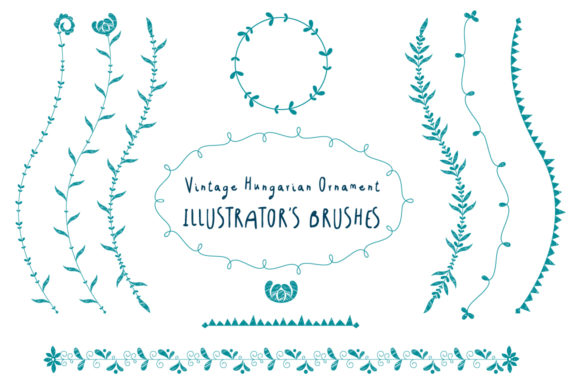
Hungarian Traditional Ornament: A Living Language of Pattern and Identity
Walk into a Budapest artisan’s studio, scroll through a contemporary textile designer’s Instagram feed in Debrecen, or browse the product pages of a Budapest-based home goods startup—and you’ll likely encounter Hungarian traditional ornament. Not as museum relics, but as bold, reinterpreted motifs stitched onto linen napkins, laser-cut into walnut coasters, or animated in subtle micro-interactions on a cultural nonprofit’s website. This isn’t nostalgia repackaged. It’s a quiet resurgence rooted in authenticity, craft literacy, and a growing desire for meaning in visual language.
More Than Decoration: What Hungarian Traditional Ornament Actually Is
Hungarian traditional ornament is a regional visual vocabulary developed over centuries across rural Hungary and historic Hungarian-speaking areas—Transylvania, the Carpathian Basin, and the Great Plain. It includes stylized floral motifs like the csillagvirág (star flower), geometric vine scrolls, symmetrical rosettes, and rhythmic zigzags often rendered in red, indigo, black, and white. Unlike generic “folk art,” these patterns were never arbitrary. They carried local identity: a specific village’s embroidery style could signal marital status, family lineage, or seasonal ritual. The matyó embroidery from Mezőkövesd, for example, features dense, layered floral compositions with no background fabric visible—a technique demanding hundreds of hours per garment. Meanwhile, kalocsa designs use freer, more painterly outlines and emphasize rhythm over strict symmetry.
What makes these ornaments distinct isn’t just aesthetics—it’s their embedded logic. Repetition, mirroring, and deliberate asymmetry aren’t decorative choices alone; they reflect agrarian rhythms, oral storytelling structures, and communal values. That intentionality is precisely why designers, educators, and small-business owners are turning to them—not as clip-art, but as generative frameworks for modern making.
Why Attention Is Shifting Now
Three converging shifts explain the renewed relevance of Hungarian traditional ornament:
- Digital fatigue and tactile longing: As interfaces grow flatter and faster, people increasingly seek texture, irregularity, and evidence of human hand. A hand-embroidered cushion using a simplified matyó motif feels materially honest beside mass-produced alternatives—especially among urban professionals aged 30–45 who value slow consumption without rejecting modern convenience.
- Local identity in a globalized market: Small brands—from ceramic studios in Pécs to natural-dye workshops near Lake Balaton—are differentiating themselves not by chasing trends, but by anchoring products in regionally specific visual heritage. A Budapest-based stationery brand doesn’t just sell notebooks; it sells notebooks bound with leather stamped using a 19th-century székely border pattern—telling a story customers can recognize, share, and feel part of.
- Educational accessibility: High-resolution digital archives (like those from the Hungarian Ethnographic Museum) and open-source vector libraries have lowered the barrier to study. Designers no longer need access to fragile textiles or academic training to understand proportion systems or color palettes. They can examine scanned kalocsa aprons pixel-by-pixel, isolate repeat units, and adapt them responsibly.
How It Fits Into Modern Workflows—Without Romanticizing Craft
Using Hungarian traditional ornament today isn’t about replicating 18th-century techniques verbatim. It’s about translation—adapting structural principles to current tools and constraints. Consider these grounded examples:
- A freelance graphic designer in Szeged uses the radial symmetry of a csillagvirág as the underlying grid for a responsive web layout—aligning navigation elements and content blocks to its natural divisions. The result feels balanced and culturally resonant, not “folksy.”
- An educator in Miskolc integrates Hungarian traditional ornament into a STEAM curriculum—not as “art history,” but as applied geometry. Students measure angles in scanned matyó repeats, code simple pattern generators using p5.js, then compare algorithmic outputs to historical variations. The ornament becomes a lens for computational thinking.
- A sustainable fashion label in Budapest sources organic linen and partners with embroiderers in Nógrád County—not to produce full folk costumes, but to co-develop signature seam finishes. A single, refined vine motif runs along sleeve hems or collar edges, subtly signaling origin and care without branding overload.
What ties these cases together is respect for source logic—not just copying shapes, but asking: How did this pattern solve a problem? What constraints shaped it? What values does its structure imply? That mindset separates meaningful integration from superficial appropriation.
Practical Implications for Creators and Businesses
If you work with visual language—whether designing packaging, teaching design, building digital products, or launching a lifestyle brand—Hungarian traditional ornament offers concrete advantages:
- Strong visual differentiation: In saturated markets (e.g., home décor, wedding stationery, artisanal food), a well-adapted Hungarian motif signals specificity and depth. It’s instantly recognizable to domestic audiences and intriguing to international buyers seeking authentic regional character.
- Natural scalability: These patterns were built for repetition—ideal for tiles, wallpapers, fabric yardage, or UI element backgrounds. Their modular nature simplifies production across mediums, from screen printing to CNC routing.
- Storytelling efficiency: A single motif can carry layers of meaning—seasonal cycles, resilience, community interdependence. That narrative weight reduces the need for lengthy brand copy, especially valuable in social media or e-commerce where attention spans are short.
- Collaboration infrastructure: Working with living practitioners—such as master embroiderers or woodcarvers—creates ethical supply chains and enriches product development. It also opens avenues for co-branded workshops, limited editions, or documentary-style content that builds trust.
Crucially, success hinges on collaboration—not extraction. That means compensating artisans fairly, crediting sources transparently (e.g., “Adapted from a 1920s kalocsa apron, Hungarian Ethnographic Museum collection”), and avoiding motifs tied to sacred or ceremonial use unless explicitly invited to do so by custodians of that tradition.
Looking Ahead: Integration, Not Imitation
The future of Hungarian traditional ornament isn’t in preservation behind glass—it’s in thoughtful, context-aware evolution. We’re seeing it in AR filters that overlay animated székely borders onto architecture photos, in parametric jewelry designs that algorithmically vary a matyó rosette based on wearer input, and in public art projects where schoolchildren reinterpret local motifs into mosaic pathways.
For creators, the opportunity lies in treating these ornaments as living systems—not static assets. That means studying how motifs changed when adapted from wool to cotton, or how color palettes shifted with the arrival of synthetic dyes. It means understanding that a pattern’s power comes less from its appearance than from the relationships it encodes: between maker and material, individual and community, past and present.
So whether you’re choosing a logo mark, developing a curriculum, sourcing textile suppliers, or selecting wall graphics for a café in Győr—the question isn’t “Can I use Hungarian traditional ornament?” It’s “What does this pattern understand about balance, repetition, or belonging—and how can that insight improve what I’m making right now?” When approached with curiosity and care, Hungarian traditional ornament isn’t just decoration. It’s a practical, adaptable, deeply human design language—one that rewards attention, invites participation, and quietly strengthens connection in an increasingly fragmented world.