Ancient Egypt: A Strategic Lens for Modern Decision-Making
Ancient Egypt isn’t just a subject of museum exhibits and documentary reels—it’s a dense, real-world case study in sustained civilization-building across more than 3,000 years. Its longevity wasn’t accidental. It emerged from deliberate choices about resource allocation, symbolic coherence, institutional memory, and adaptive governance—not divine intervention or mystic luck. For today’s professionals navigating volatile markets, fragmented attention, and accelerating complexity, Ancient Egypt offers something rare: a long-view laboratory of human systems that worked, evolved, and endured.
Why This Matters for Your Goals—and How It Differs from Trend-Driven Thinking
Most strategic frameworks compress time: quarterly roadmaps, agile sprints, viral content calendars. Ancient Egypt operates on a different temporal scale—one where decisions were made with multi-generational consequences in mind. Pharaohs commissioned temples not for immediate returns but to anchor authority, standardize ritual, and encode knowledge across dynasties. That kind of intentionality isn’t about slowing down—it’s about calibrating your pace to the actual lifespan of your goals.
Consider how this applies directly:
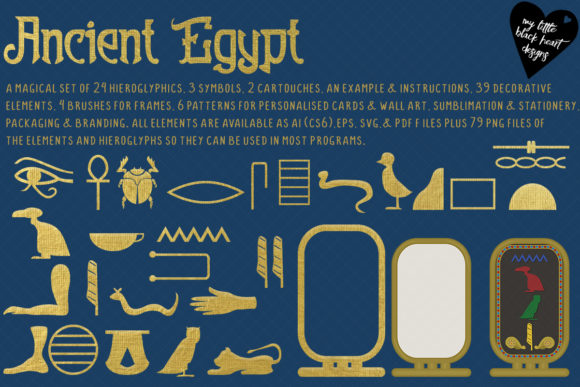
- Branding: The consistent use of iconography—ankhs, cartouches, falcon-headed deities—wasn’t decorative. It was system-level visual governance. Modern brands often chase novelty while eroding recognition. Ancient Egypt reminds us that coherence compounds over time; repetition, when rooted in meaning, builds trust faster than constant reinvention.
- Operations: The Nile’s annual flood dictated agricultural cycles, tax collection, labor mobilization, and record-keeping. Rather than fighting unpredictability, Egyptian administrators built infrastructure—canals, granaries, hieratic script—that turned environmental rhythm into operational reliability. Your “Nile” might be customer seasonality, regulatory cadence, or platform algorithm shifts. The lesson isn’t rigidity—it’s designing processes that absorb, anticipate, and leverage recurring patterns.
- Learning & Knowledge Transfer: Scribes trained for over a decade, mastering not just writing but mathematics, astronomy, and administration. Knowledge wasn’t siloed—it was layered, contextualized, and tied to function. Today’s LMS dashboards and microlearning modules often prioritize speed over depth. Ancient Egypt suggests that when outcomes matter—compliance, safety, innovation—structured, scaffolded learning yields higher fidelity and fewer costly errors.
When to Apply Ancient Egypt—And When Not To
Ancient Egypt is most useful as a strategic reference point, not a template. It shines when you’re designing for endurance, clarity under ambiguity, or alignment across large groups. It falters when misapplied as historical cosplay—slapping pyramids on a pitch deck or invoking “pharaonic leadership” without examining what that actually meant (centralized authority yes—but also distributed priesthoods, regional governors, and frequent succession crises).
Use it thoughtfully in these situations:
- You’re launching a long-term initiative—like a curriculum, product line, or community—where consistency of voice, symbol, or structure will shape perception for years. Ask: What elements can we lock in early—not for permanence, but for recognizability and cognitive ease?
- Your team struggles with shared context—especially across departments or geographies. Ancient Egypt standardized measurement (cubits), timekeeping (lunar and solar calendars), and legal precedent (the Ma’at principle of balance and truth). Identify one high-leverage convention—naming conventions, reporting rhythms, decision criteria—and standardize it deliberately.
- You’re rebuilding after disruption—a merger, leadership change, or market shift. Notice how Egyptian culture preserved continuity even during intermediate periods: new rulers adopted old titles, rebuilt damaged temples, and reused inscriptions. That wasn’t nostalgia—it was strategic signaling. What visible, low-cost acts of continuity can reinforce stability without freezing progress?
Practical Planning Tips Rooted in Evidence, Not Myth
Start small—and ground each choice in observable cause and effect:
- Map your “Nile Cycle”: List three recurring external rhythms affecting your work—e.g., fiscal year-end, academic semesters, holiday purchasing behavior. For each, document how your current systems respond (or fail to). Then ask: Where could anticipation replace reaction? What buffer—like Egypt’s grain reserves—could you build?
- Define your “Ma’at Metric”: In Egyptian thought, Ma’at represented order, justice, and reciprocity—not perfection, but functional balance. Choose one measurable relationship in your work (e.g., support ticket resolution time vs. agent well-being, content output vs. audience retention) and define the healthy range—not a target, but a corridor. Monitor drift, not deviation.
- Design for legibility—not just aesthetics: Hieroglyphs evolved into hieratic and demotic scripts because scribes needed speed and clarity—not artistic flourish. Audit one internal document or dashboard: What’s truly necessary for the user to act? What can be removed, grouped, or standardized to reduce cognitive load?
The Risk of Using Ancient Egypt Without Context
Without clear goals or grounding, references to Ancient Egypt become decorative noise—or worse, misleading analogies. Claiming your startup has “pyramid-shaped leadership” ignores that Egyptian labor wasn’t coerced by hierarchy alone: it was motivated by religious duty, food rations, social mobility, and communal identity. Misreading those drivers leads to flawed assumptions about motivation, control, or scalability.
Similarly, citing “4,500-year-old stability” obscures reality: Ancient Egypt experienced at least three major collapses—the First, Second, and Third Intermediate Periods—each marked by decentralization, foreign incursion, and systemic recalibration. Stability wasn’t static; it was actively maintained through adaptation. Applying Ancient Egypt without acknowledging its fractures risks promoting brittle rigidity over resilient structure.
How to Use Ancient Egypt Intentionally—Not Randomly
Intentional use starts with a question: What specific outcome am I trying to influence? Not “inspiration,” not “brand differentiation,” but something concrete—e.g., “reduce onboarding time for new client managers by 30%,” or “increase cross-departmental project alignment by Q3.” Then ask: Does Ancient Egypt offer a documented pattern relevant to that outcome?
For example:
- If your goal is faster knowledge transfer, study how Egyptian apprenticeship worked: multi-year immersion, oral instruction paired with physical practice (e.g., carving, surveying), and progressive responsibility. Contrast that with your current documentation-heavy, self-serve onboarding. Where might guided practice accelerate mastery?
- If your goal is stronger stakeholder buy-in, examine how temple construction united priests, artisans, farmers, and scribes around shared cosmology and tangible benefit (irrigation, festivals, employment). What shared purpose or visible outcome can anchor your next cross-functional initiative—beyond “hitting the deadline”?
- If your goal is resilient communication during uncertainty, look at how Egyptian texts like the Admonitions of Ipuwer named chaos without prescribing panic—framing disruption as cyclical, not apocalyptic. How might your internal messaging name challenges honestly while reinforcing agency and precedent?
This isn’t about emulating antiquity. It’s about recognizing that human systems—how we organize time, assign meaning, distribute authority, preserve knowledge—follow recognizable patterns. Ancient Egypt gives us unusually rich, well-documented examples of those patterns in action. Its value lies not in its age, but in its density of tested decisions.
Final Strategic Observation
The most enduring Egyptian monuments weren’t built for immortality—they were built to serve a function across generations: temples aligned to solstices for calendrical precision, tombs designed to guide the deceased through known spiritual terrain, administrative texts that tracked grain stores down to the bushel. Function preceded form. Meaning preceded monument.
That discipline—designing first for utility, coherence, and longevity—is what makes Ancient Egypt strategically relevant today. When your next planning session begins, ask not “What’s trending?” or “What looks impressive?” but “What will still serve its purpose—and make sense to someone else—three years from now?” That question, asked with rigor, is the quiet inheritance of Ancient Egypt.